
In recent weeks, a previously little-known Japanese manga has captured headlines both domestically and internationally. In "The Future I Saw" (Watashi ga Mita Mirai), creator Ryo Tatsuki presents a foreboding that Japan will face an immense natural catastrophe in July 2025. This purported prophecy is reportedly influencing some travelers to cancel summer trips to Japan, while also spreading rapidly across Japanese social networks. What lies behind the apparent willingness of some to take Tatsuki’s claims seriously? And how is an upcoming horror movie connected to this growing concern?
Ryo Tatsuki’s manga "The Future I Saw" originally debuted in 1999. The work stars a character modeled after Tatsuki herself, built upon the dream journals she has maintained since 1985. The cover of the 1999 edition shows her character shielding one eye, with images above her head alluding to various "visions" she says she experienced. One of these visions is captioned “March 2011: A Great Disaster.” Following the tragic Tohoku Earthquake and Tsunami that ravaged Japan in March 2011, Tatsuki’s work resurfaced in the public consciousness, sparking renewed interest and causing out-of-print copies to fetch premium prices on resale platforms.
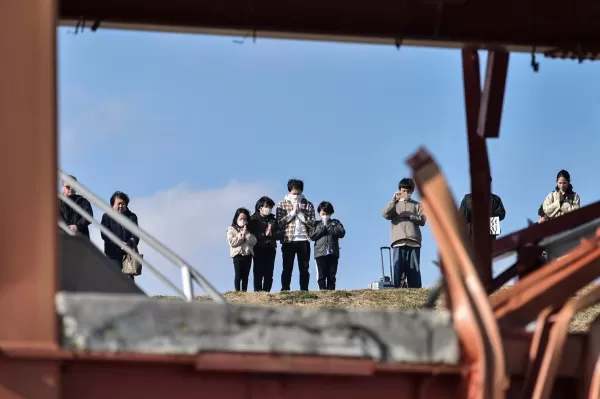
In 2021, an updated edition titled "The Future I Saw: Complete Edition" was released. This version introduced another ominous forecast: an even larger natural calamity will strike Japan in July 2025. Tatsuki warns of a tsunami three times more powerful than the one in March 2011. Given the perceived accuracy of her earlier March 2011 prediction, details of this new July 2025 warning soon circulated widely on social media across Japan.
As noted by various news sources, Tatsuki’s July 2025 warning appears to have influenced a number of superstitious individuals to reconsider visiting Japan this summer. The extent of this change is not entirely clear, though its effect seems most visible in Hong Kong, where the manga is sold in translation. According to Sankei Shimbun and CNN, Hong Kong-based astrologer and television figure Master Seven has reinforced Tatsuki’s forecast, stating that Japan's earthquake risk will be elevated between June and August this year.
Within Japan, television coverage has highlighted how airlines based in Hong Kong are responding to these predictions. As reported earlier this month by ANN News and others, Hong Kong Airlines canceled its thrice-weekly flights to Sendai—a city heavily damaged during the 2011 earthquake. Similarly, Greater Bay Airlines is scaling back direct flights from Hong Kong to Sendai and Tokushima between May and October, citing a sharp drop in travel demand. Possible reasons include the July disaster forecast as well as growing economic concerns. During a press conference at the end of April, Miyagi Prefecture Governor Yoshihiro Murai—whose region includes Sendai—dismissed the "unscientific basis" of the disaster rumors spreading online and encouraged travelers to disregard them.
Predictably, this surge in media coverage of "The Future I Saw" and its alleged effect on tourism has put the manga back in the spotlight. On May 23, reports confirmed that the Complete Edition had sold more than 1 million copies. This renewed public interest also aligns with the impending release of a film titled "July 5 2025, 4:18 AM," set to open in Japanese theaters on June 27. The movie's protagonist, who celebrates her birthday on July 5, begins experiencing eerie occurrences, drawing inspiration from Tatsuki's July 2025 earthquake scenario. The extensive media attention on the manga and its disaster predictions is likely boosting awareness for the movie as well.
Nevertheless, some online discussions and video posts in Japan have mistakenly linked the movie’s title to the specific date and time of the predicted disaster, while mixing scientific earthquake data with sensationalist claims. This confusion prompted publisher Asuka Shinsha to release a clarifying statement: “We reiterate that the author, Tatsuki, never referenced the exact date and time indicated by the movie’s title. We respectfully ask everyone to avoid being misled by fragmented media and social media posts.”
From earthquakes and tsunamis to flooding and landslides, Japan regularly confronts natural disasters. Although Tatsuki's premonition may not be rooted in science, it touches upon a broader, scientifically supported anxiety. Seismologists estimate a 70–80% likelihood of a major Nankai Trough earthquake occurring within the next 30 years (sources: Asahi News, Kobe University). This topic reemerged in Japanese news this year after the government updated fatality projections for such an event at the end of March 2025. A Nankai Trough megaquake could affect vast portions of Japan, endangering many large cities and potentially causing around 300,000 deaths. It could also trigger enormous tsunamis, which helps explain why alarming online posts often merge Tatsuki’s prediction with scientific worst-case scenarios. At present, however, accurately predicting the precise date and location of a major earthquake and tsunami remains impossible—the Japan Meteorological Agency labels such specific forecasts as “hoaxes” on its homepage. Given Japan’s vulnerability to natural disasters, Tatsuki's correct call for March 2011 may simply have been coincidental.
In the past few weeks, numerous Japanese-speaking users on X have voiced criticism of the media stir and public panic surrounding Tatsuki's forecast. “It’s absurd to put faith in disaster predictions from a comic book. The Nankai Trough quake could occur any day,” one user stated. Tatsuki herself has responded to the attention, expressing satisfaction if the renewed interest in her manga enhances public readiness for disasters. Still, she urges people not to be “overly swayed” by her premonition and to “base their actions on expert guidance” (Mainichi Shimbun).