
The Nvidia GeForce RTX 5090 may reign supreme in the graphics card arena, but its hefty price tag of $1,999 and above puts it out of reach for most gamers. Fear not, as you can still enjoy stellar 4K gaming without breaking the bank. The Nvidia GeForce RTX 5070 Ti and the AMD Radeon RX 9070 XT offer more budget-friendly options while delivering robust 4K gaming performance.
Currently, the market is seeing elevated prices due to high demand and limited supply following the launch of these GPUs. However, for those seeking a high-end gaming experience, the RTX 5070 Ti and RX 9070 XT are the standout choices to consider.
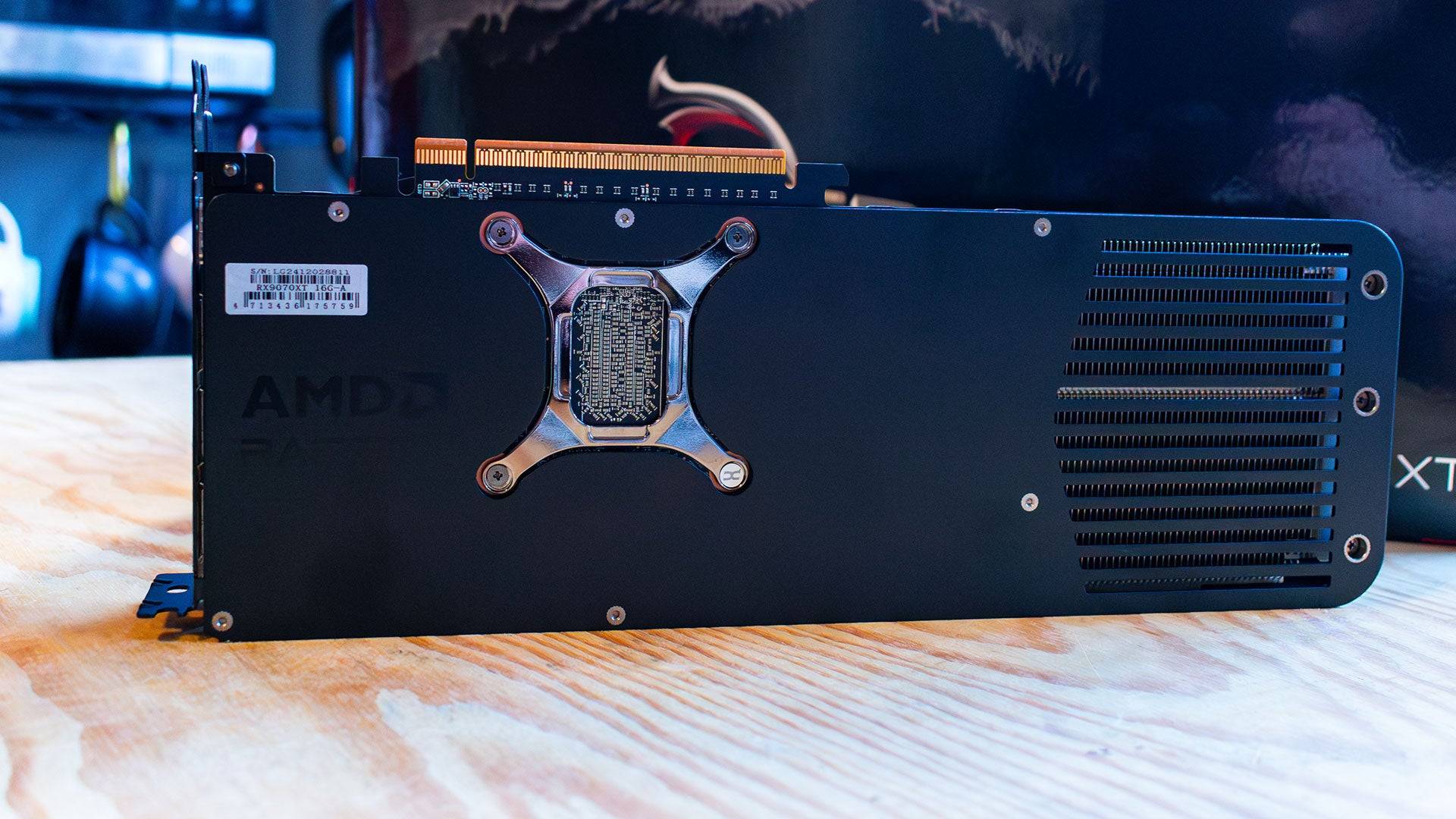
AMD Radeon RX 9070 XT – Photos
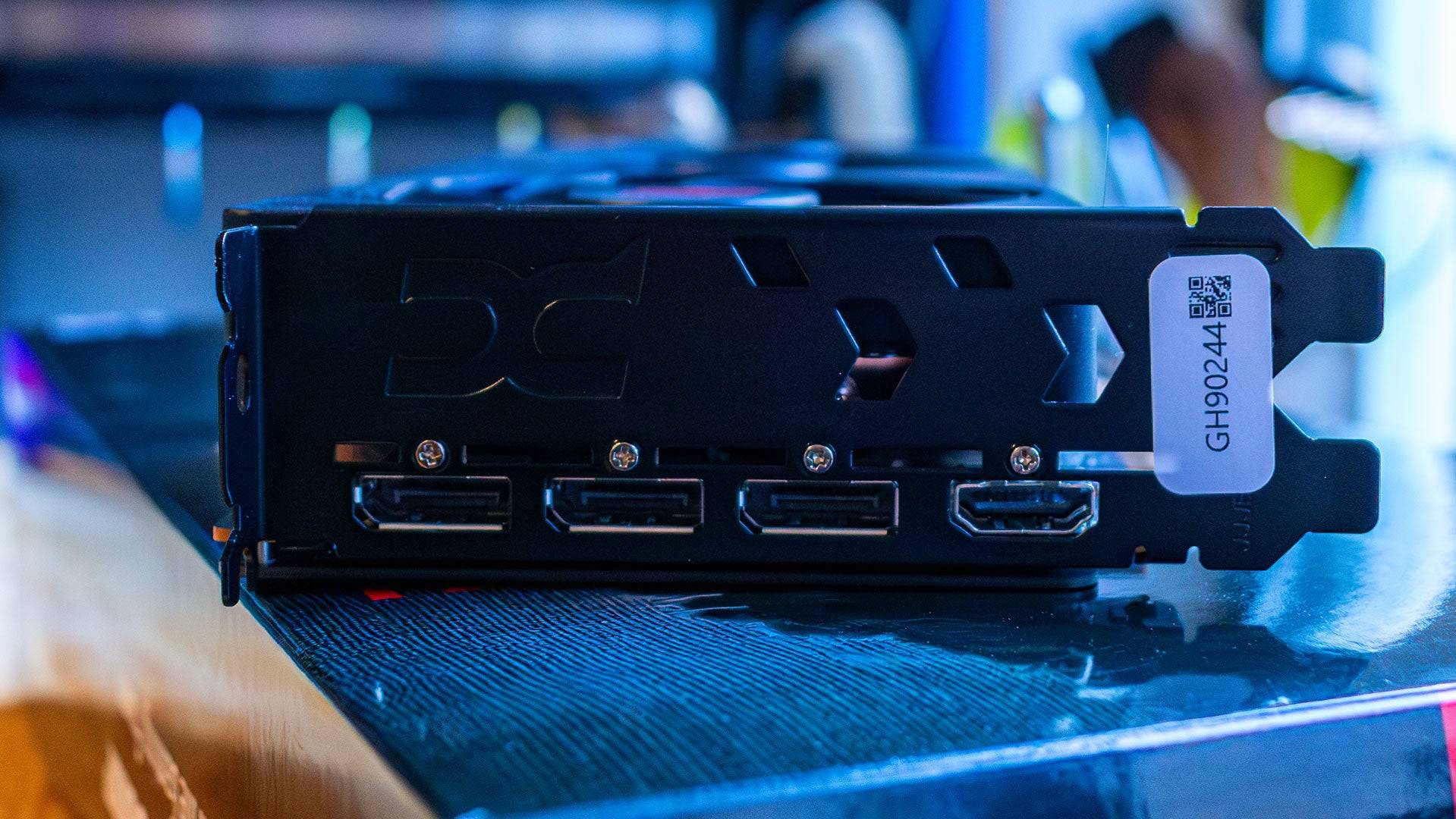
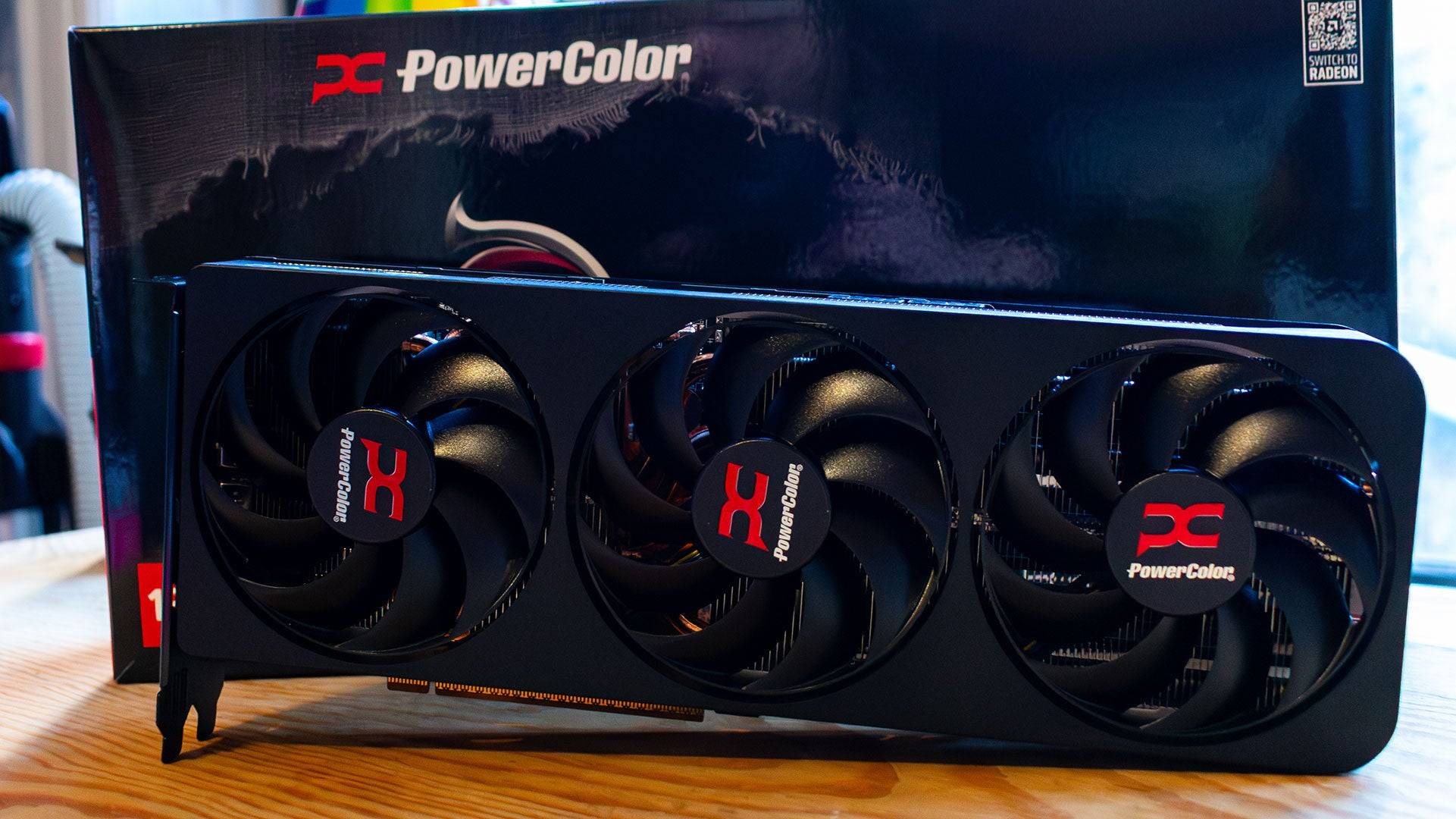 4 Images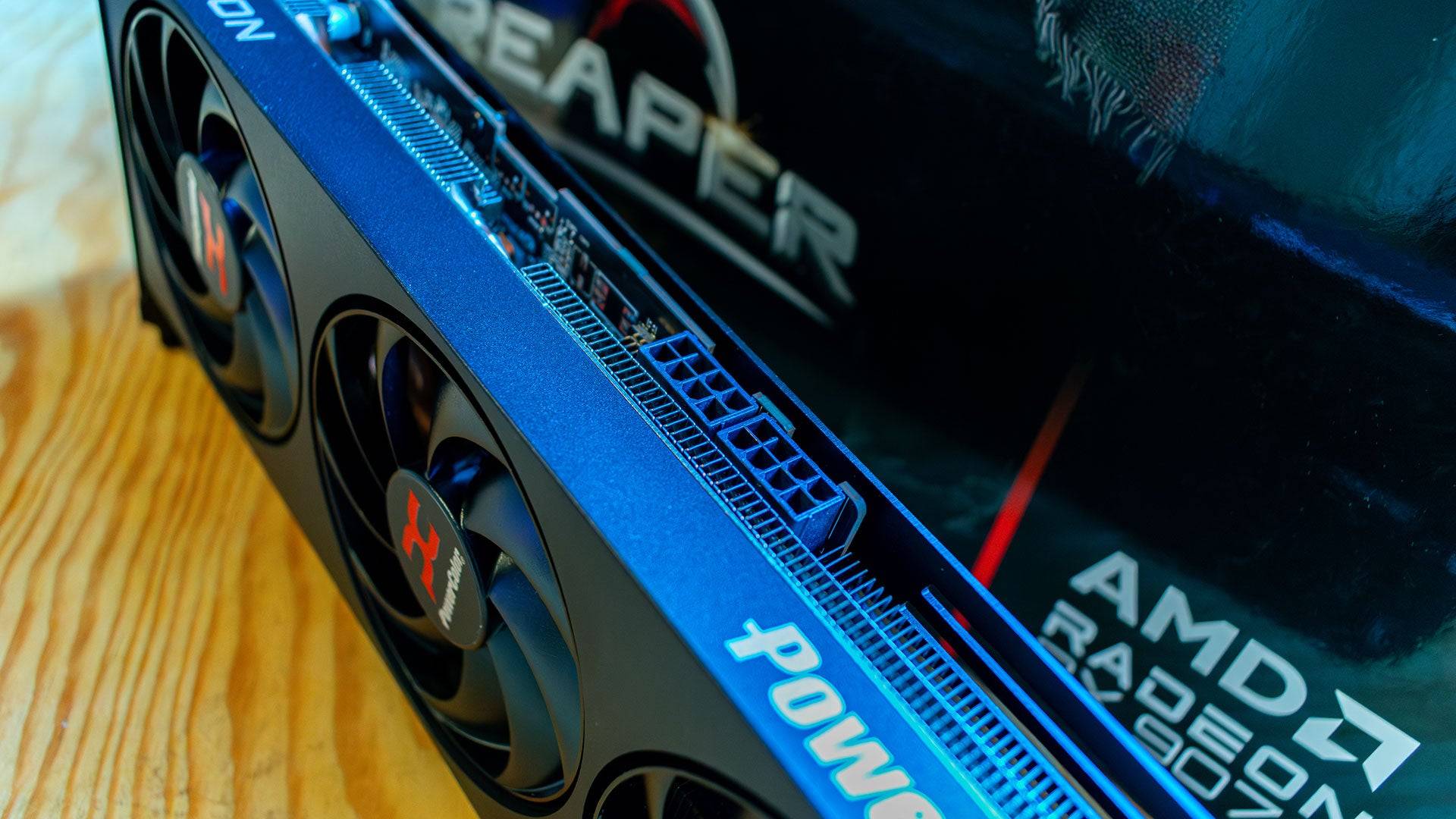
RTX 5070 Ti vs. RX 9070 XT: Specs
Comparing graphics cards from Nvidia and AMD can be complex due to their differing architectures. Nvidia's CUDA cores and AMD's Shading Units, though similar in function, are not directly comparable in terms of quantity.
The AMD Radeon RX 9070 XT boasts 64 RDNA 4 compute units, each with 64 shader units, totaling 4,096 shader units. It also includes two AI Accelerators and one RT Accelerator per compute unit, resulting in 128 and 64, respectively. Coupled with 16GB of GDDR6 memory on a 256-bit bus, this GPU is well-equipped for current gaming needs, though it might face challenges in future 4K gaming.
In contrast, the Nvidia GeForce RTX 5070 Ti also comes with 16GB of memory, but utilizes the newer GDDR7, which offers higher speeds and bandwidth on the same 256-bit bus. It features 70 Streaming Multiprocessors, containing a total of 8,960 CUDA Cores. Although Nvidia's design allows for more shader units per compute unit, this doesn't necessarily translate to double the performance.
Winner: Nvidia GeForce RTX 5070 Ti
AMD Radeon RX 9070 XT & 9070 – Benchmarks
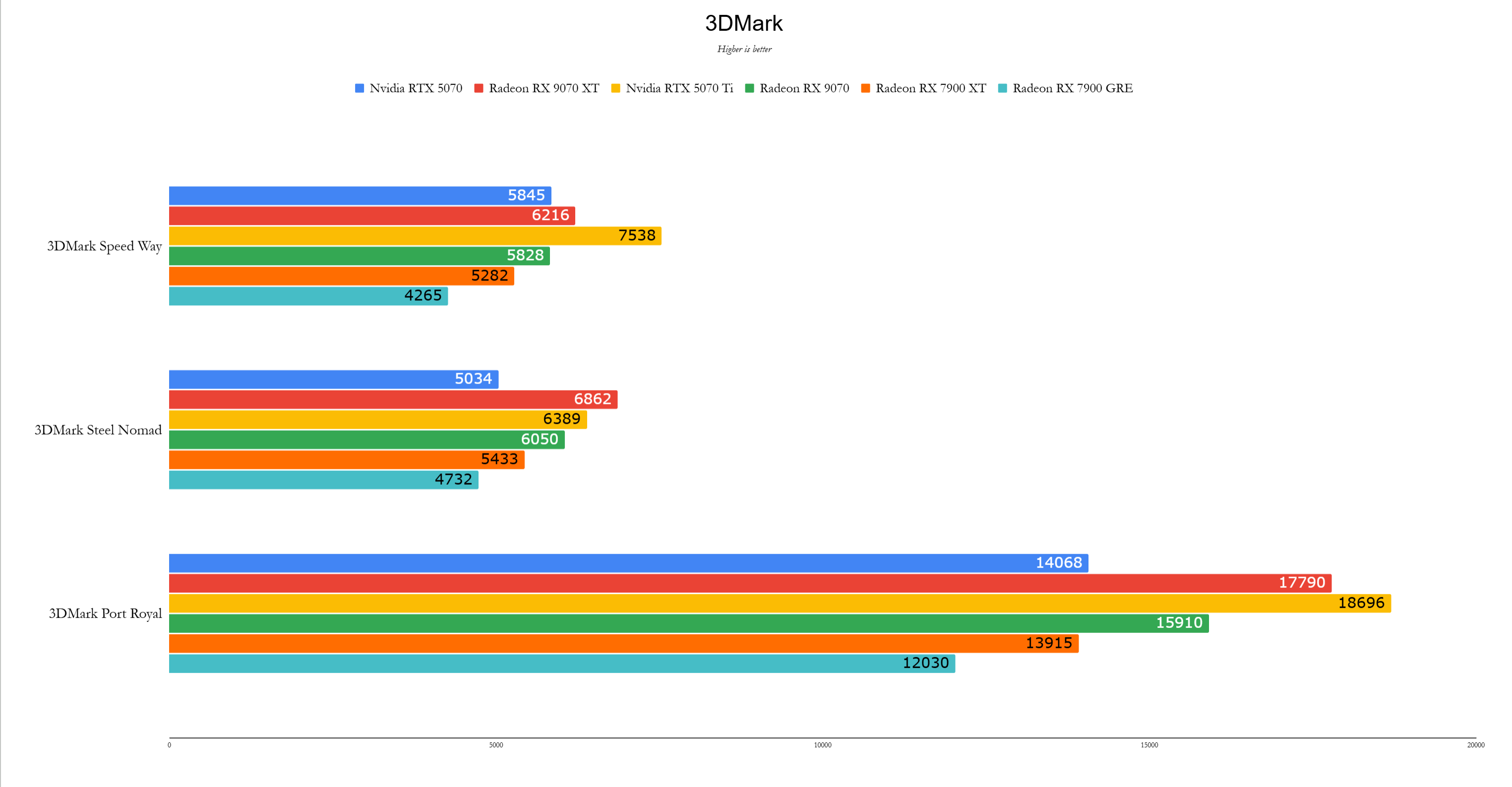
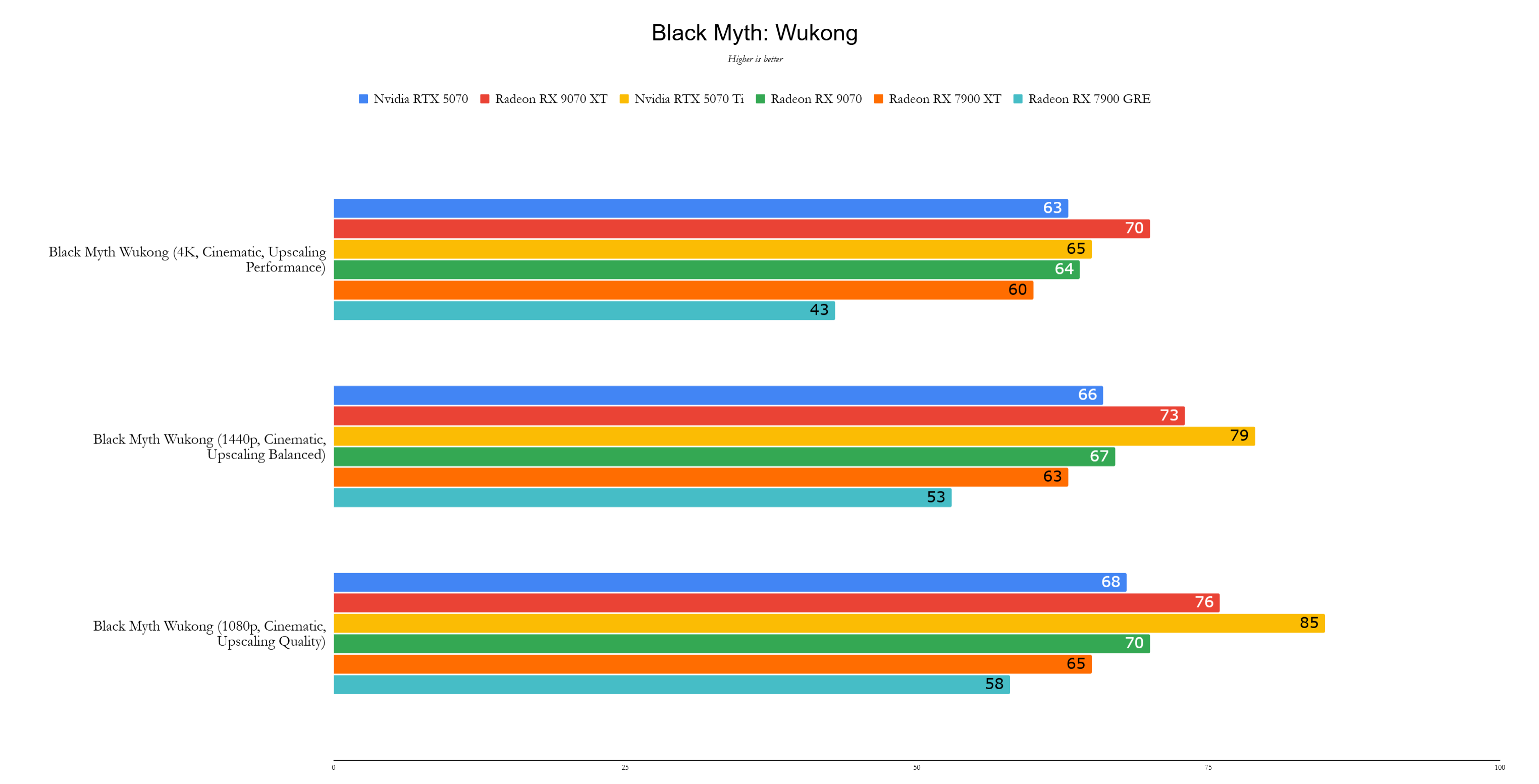 11 Images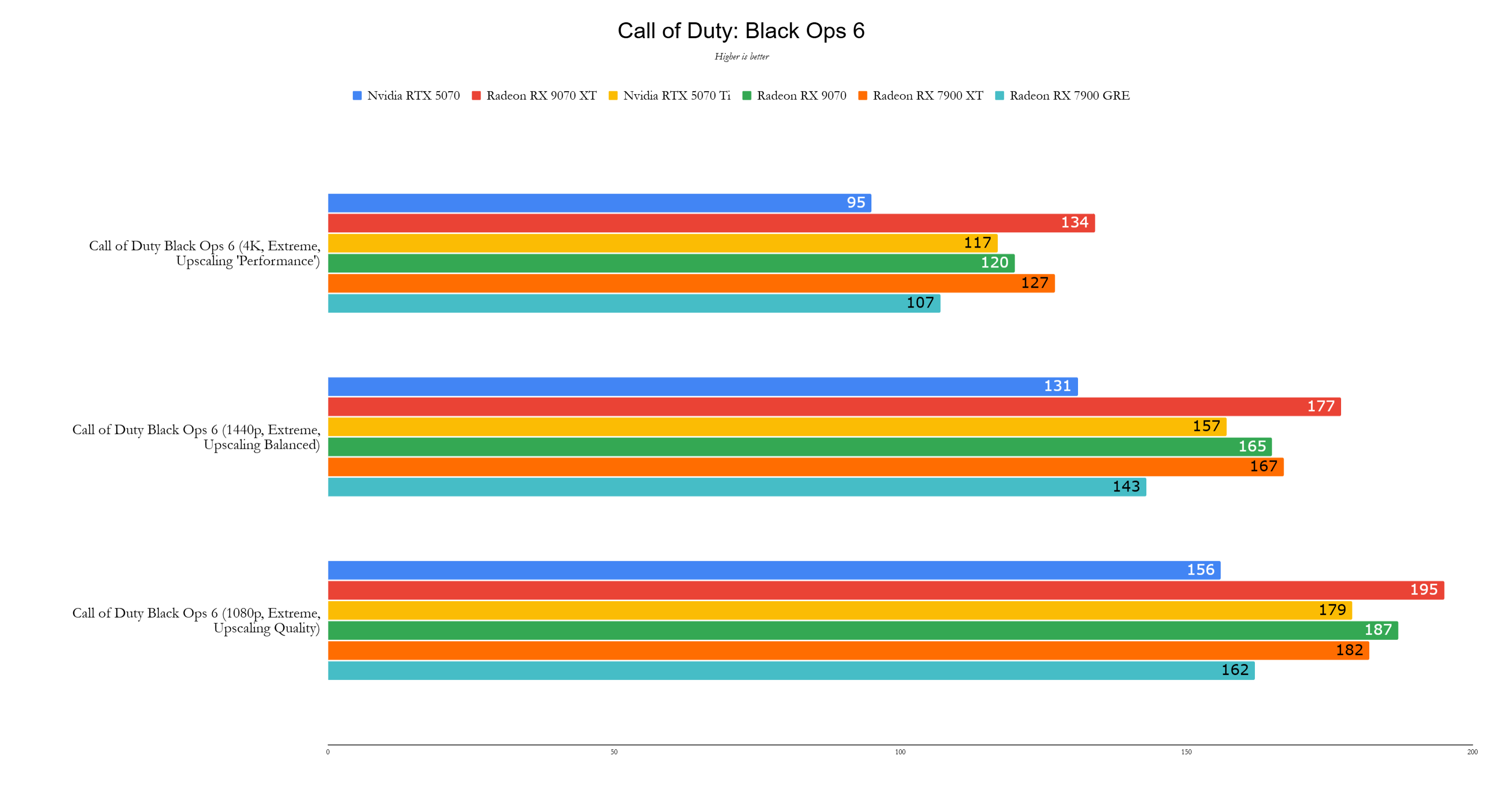
RTX 5070 Ti vs. RX 9070 XT: Performance
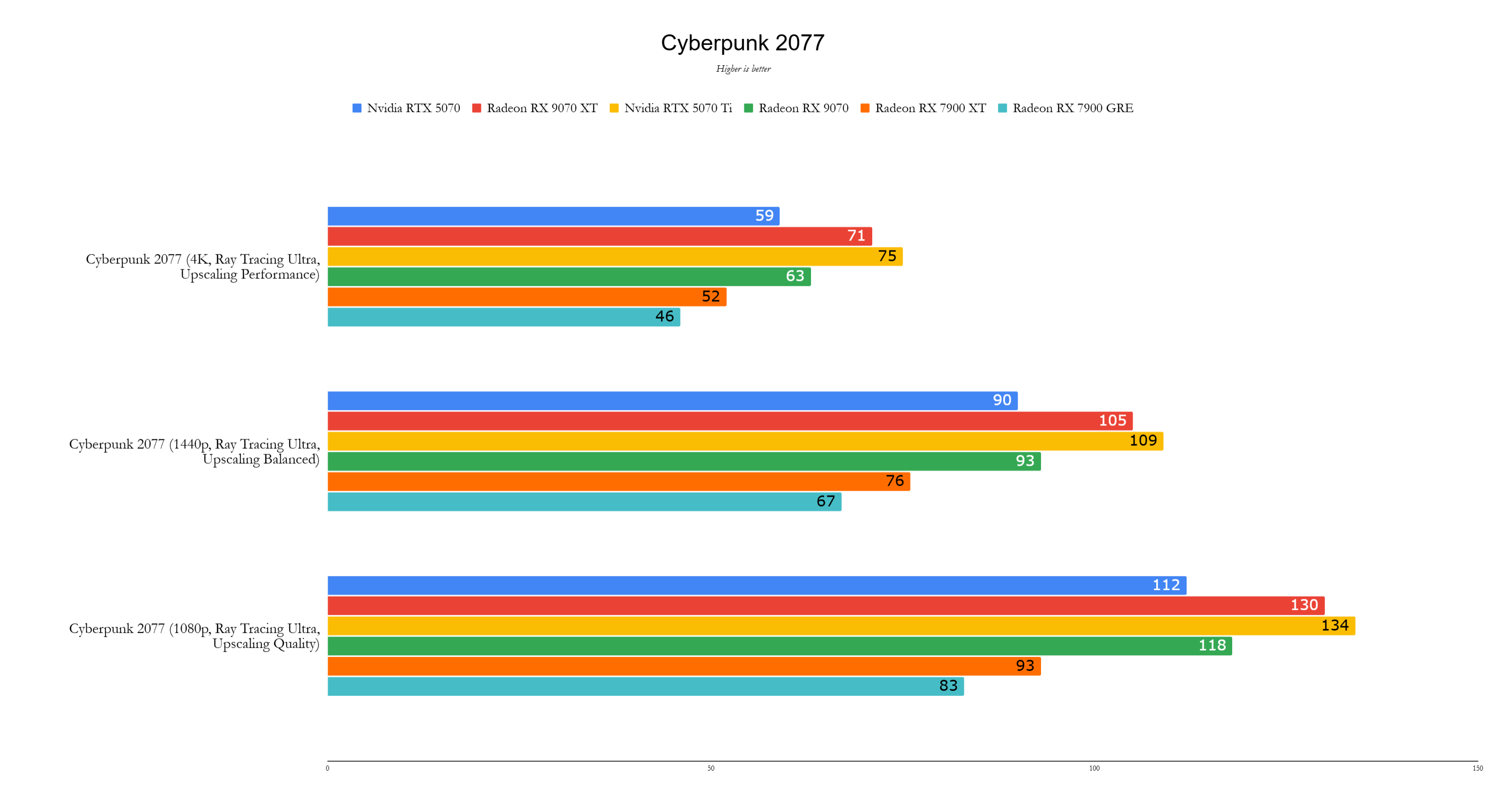
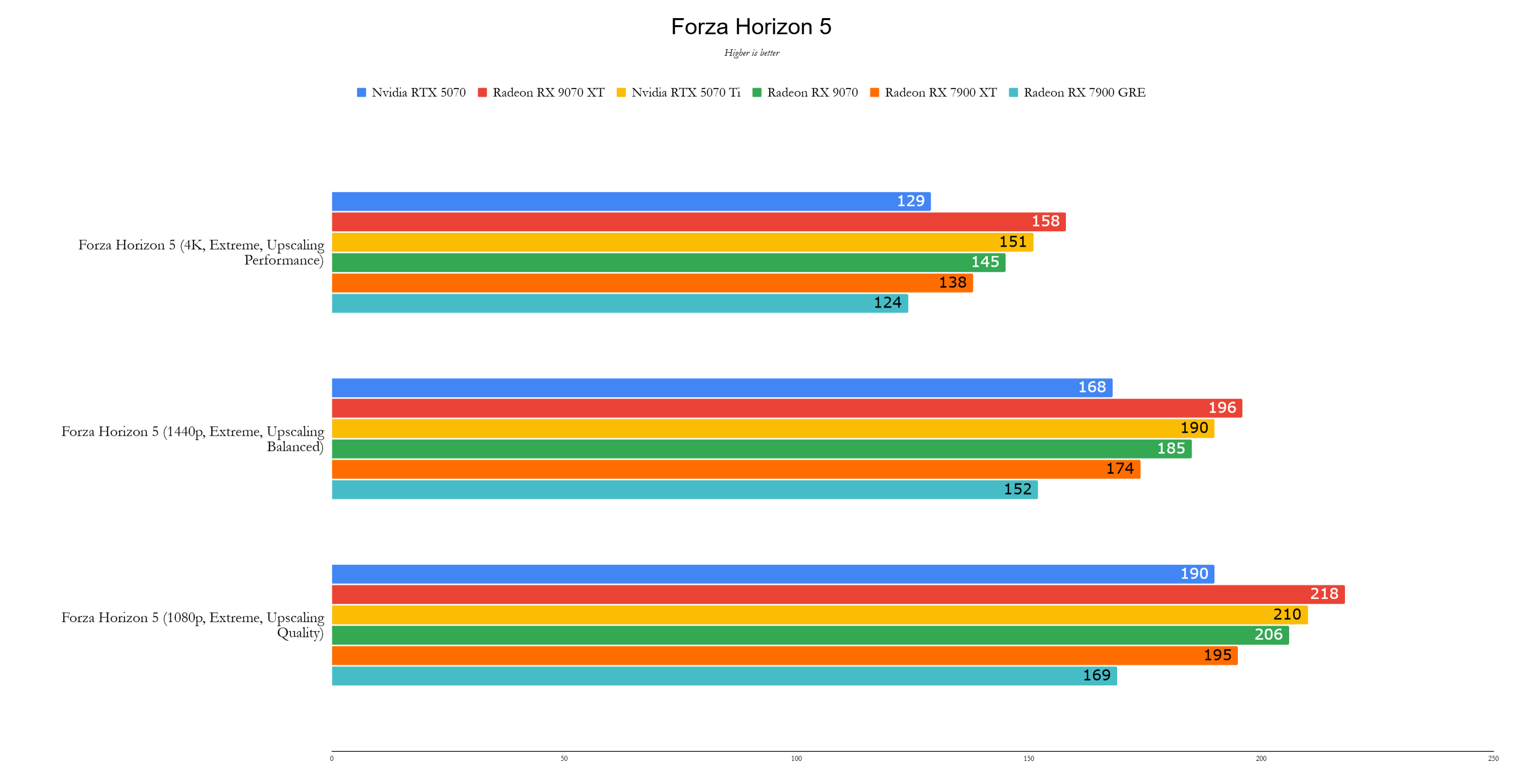
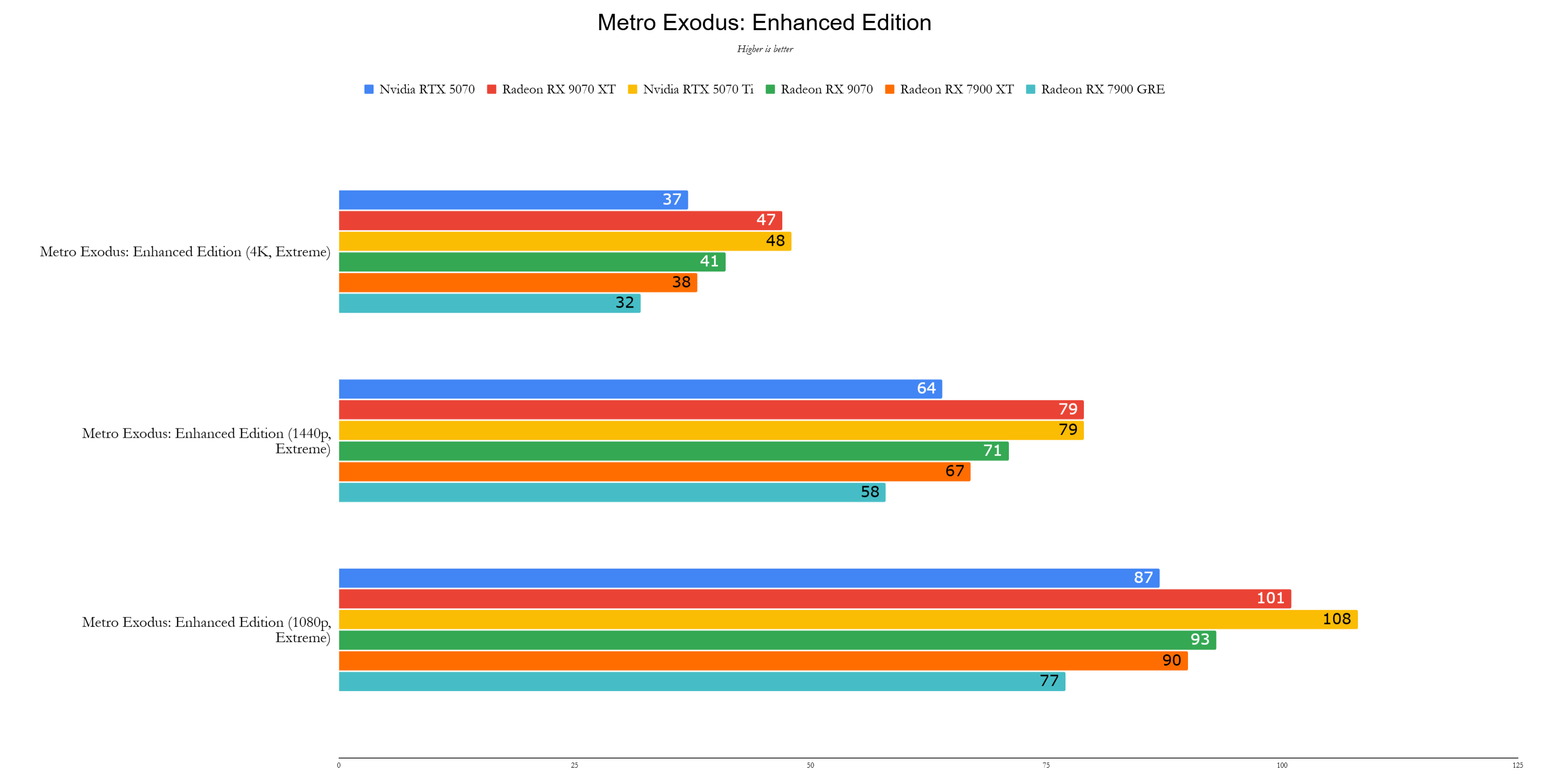
Despite the RTX 5070 Ti's superior specs on paper, real-world performance tells a different story. Both the RTX 5070 Ti and RX 9070 XT excel as entry-level options for 4K gaming and are top performers at 1440p.
During my review of the AMD Radeon RX 9070 XT, I anticipated it would lag slightly behind the RTX 5070 Ti, particularly in ray-traced games. However, the AMD card impressively kept pace, staying within a few frames of the RTX 5070 Ti even in demanding titles like Cyberpunk 2077.
While the RTX 5070 Ti does outshine in some games, such as Total War: Warhammer 3, where it achieves 87fps at 4K compared to the RX 9070 XT's 76fps, the overall performance difference is minimal. On average, the RX 9070 XT was 2% faster than the RTX 5070 Ti, a significant achievement considering its lower price point.
Winner: AMD Radeon RX 9070 XT
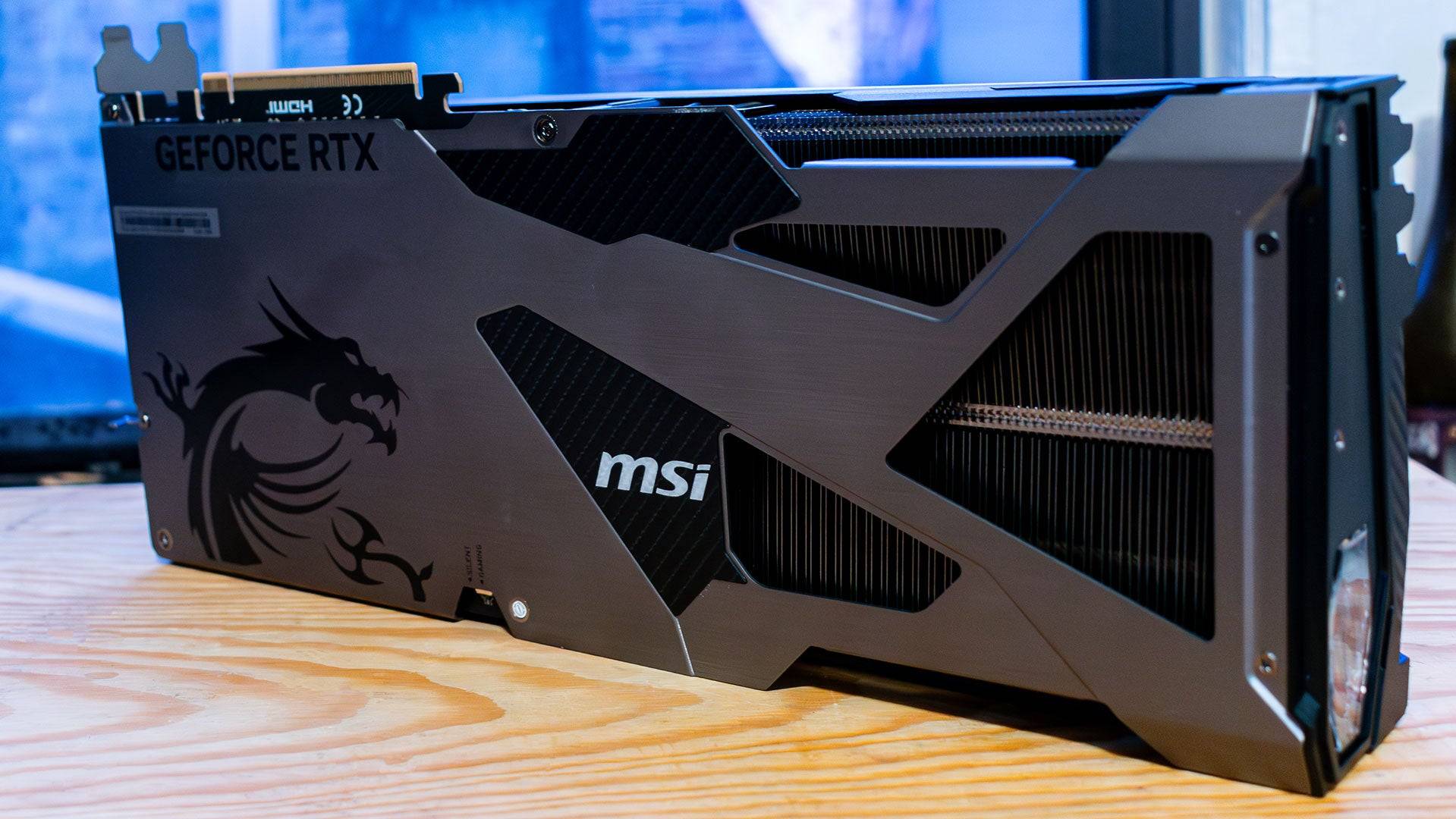
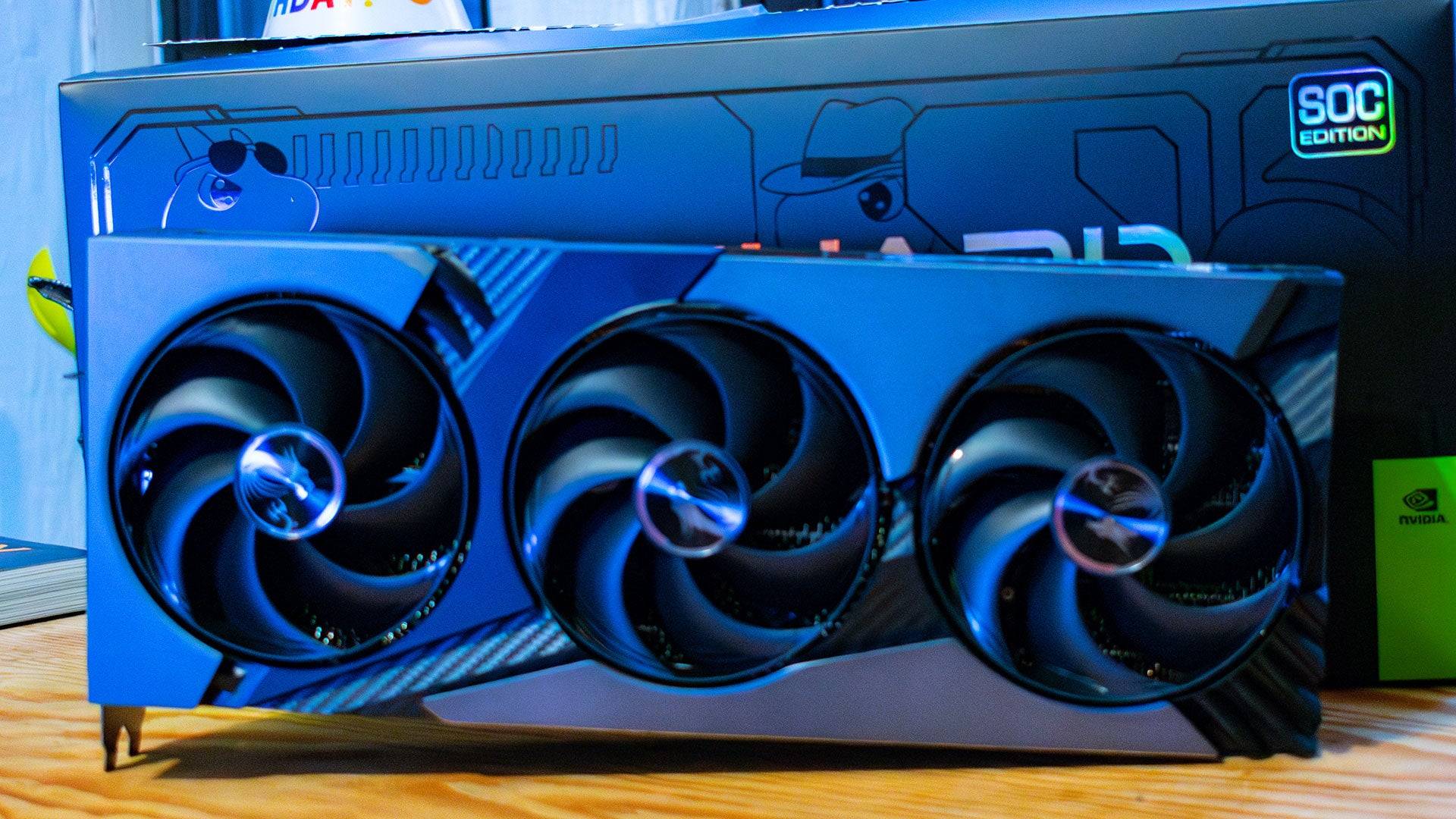
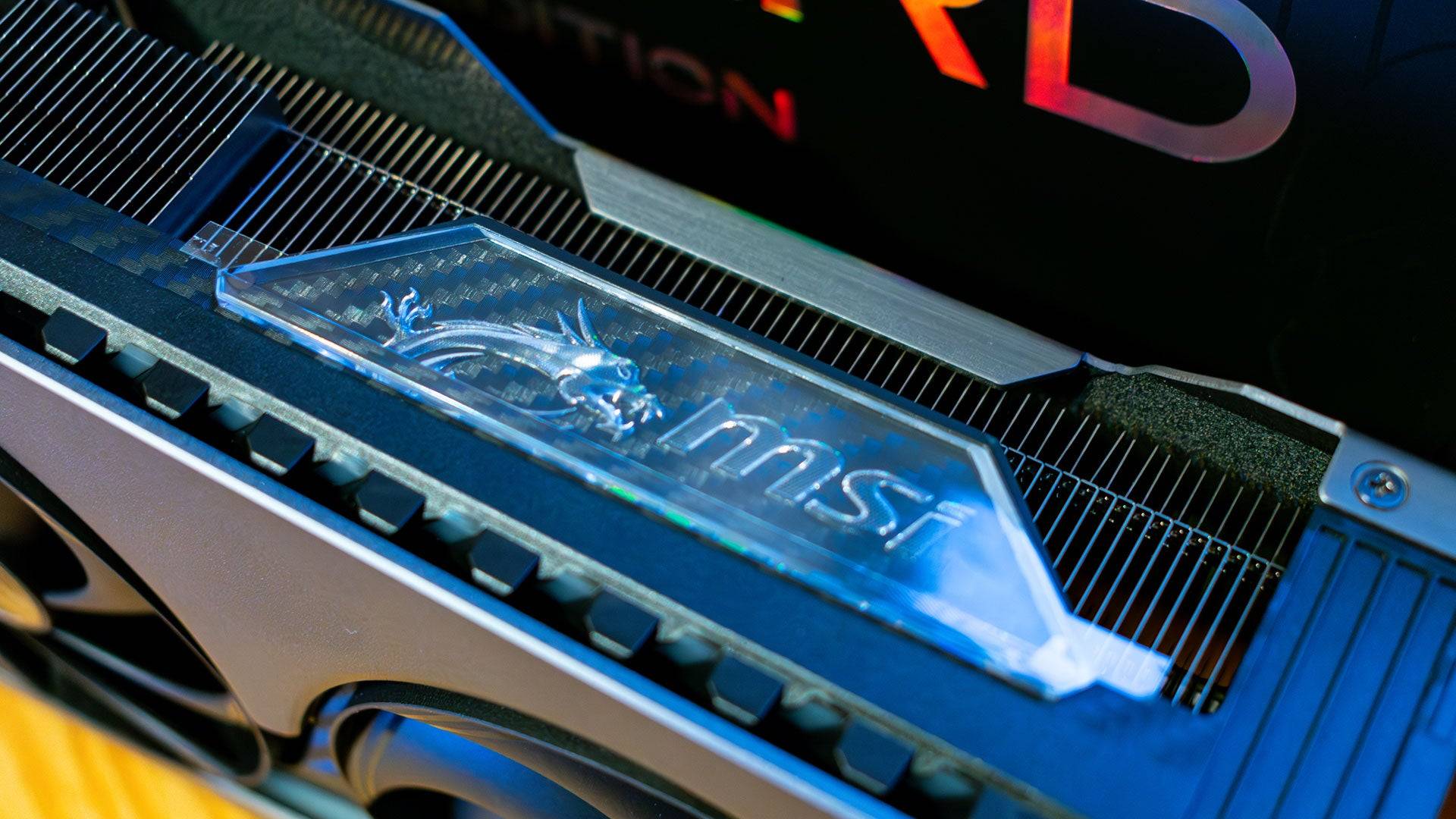
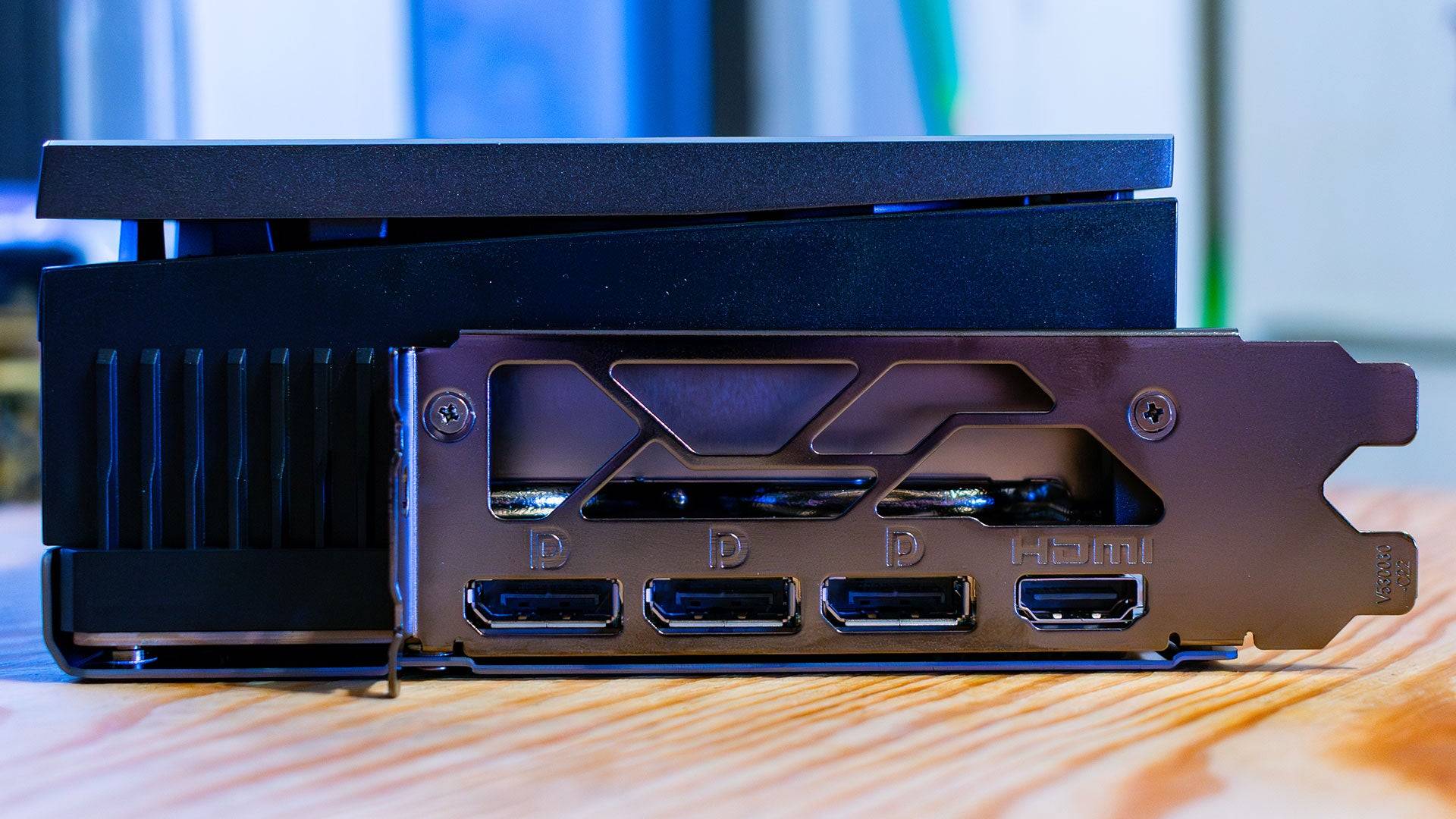
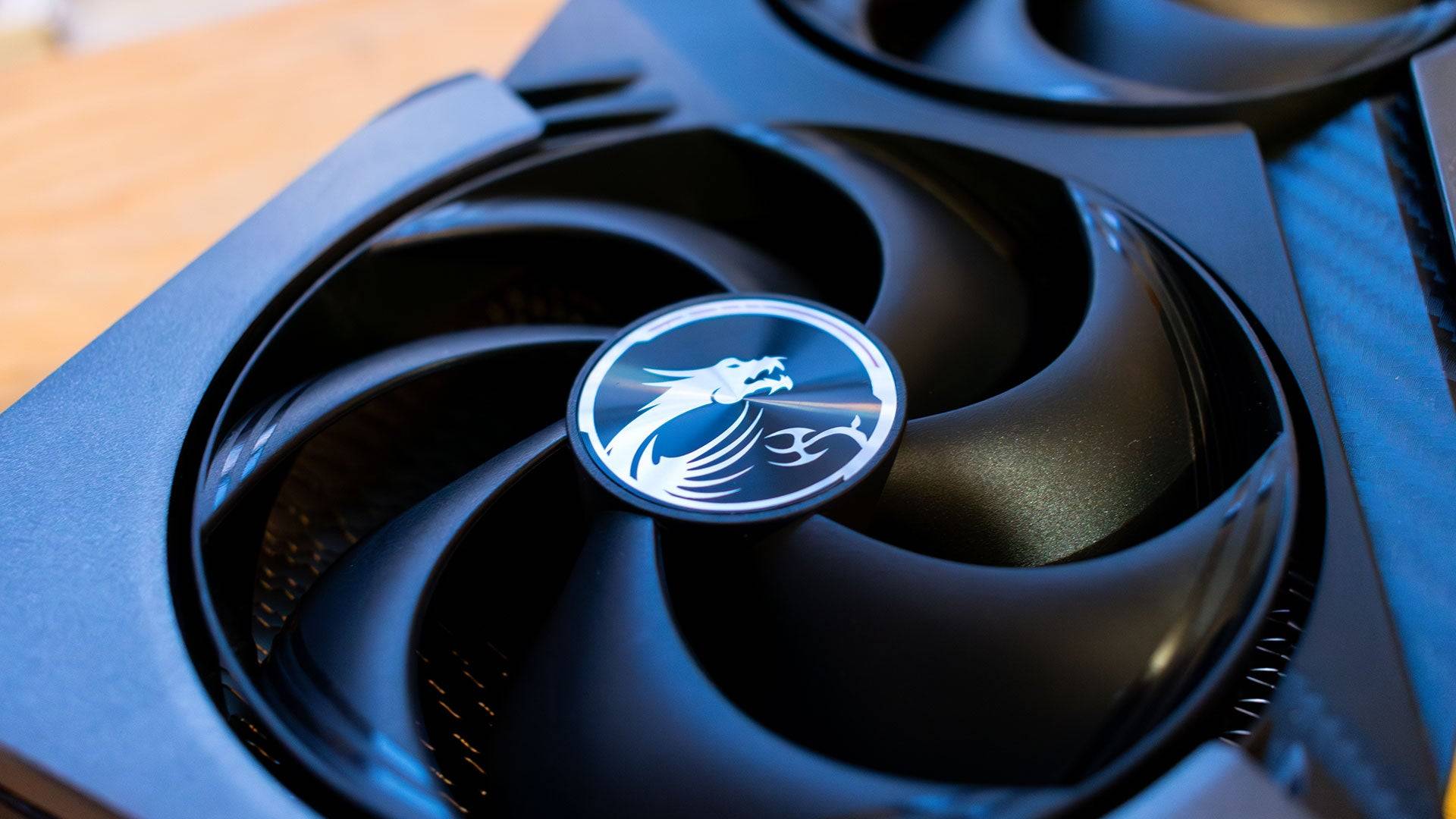
Nvidia GeForce RTX 5070 Ti – Photos
 6 Images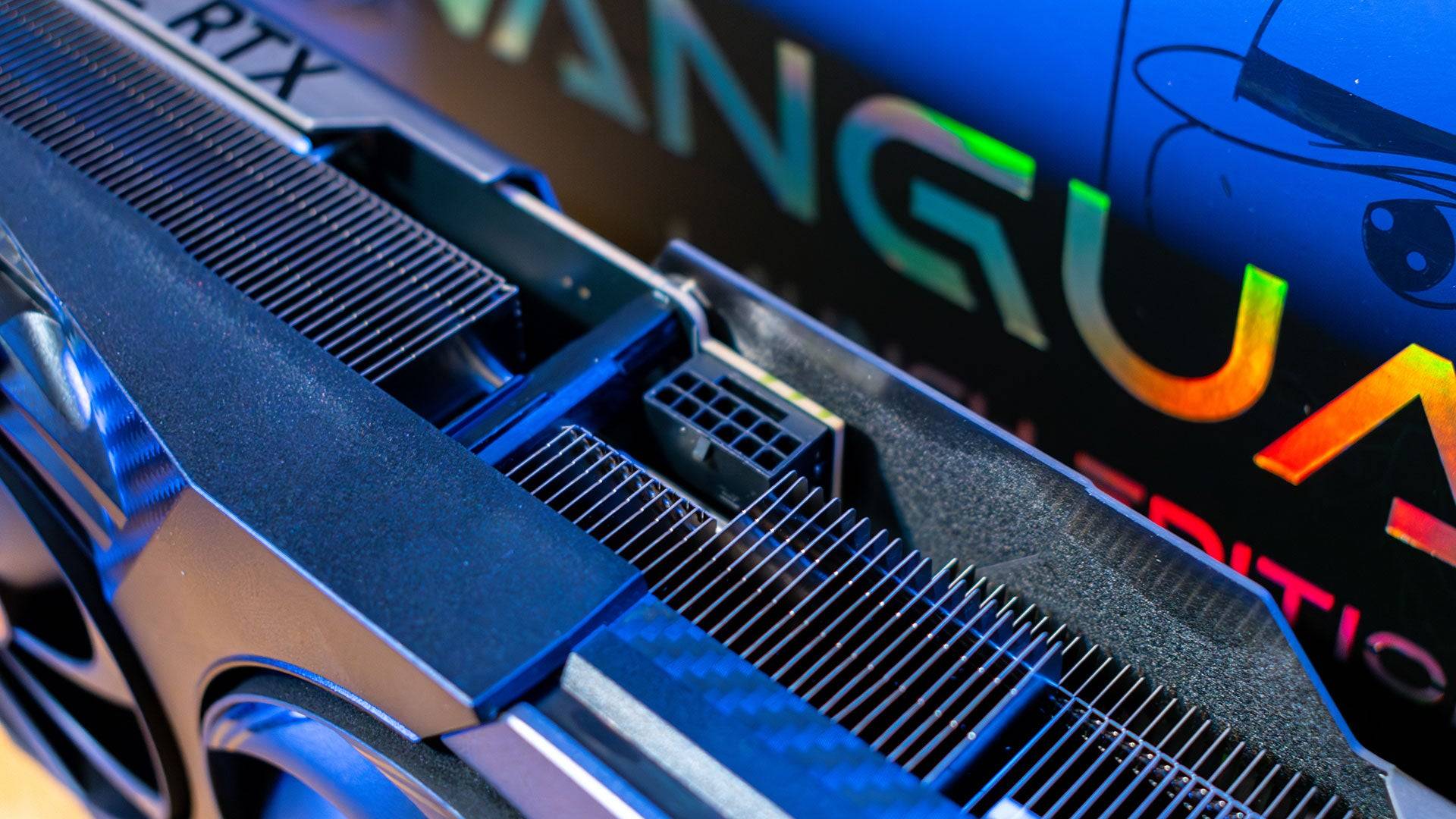
RTX 5070 Ti vs. RX 9070 XT: Software and Features
Choosing a graphics card today involves more than just hardware specs; it's also about the accompanying software features.
Nvidia's RTX 5070 Ti shines with its DLSS suite, which now includes AI upscaling and Frame Generation. With the introduction of DLSS 4, Nvidia has enhanced Frame Generation to produce three AI-generated frames for each rendered frame, significantly boosting frame rates, albeit with a slight latency increase mitigated by Nvidia Reflex. This feature is best utilized when you're already achieving a solid frame rate, ideally over 60fps.
AMD counters with its own Frame Generation, albeit limited to one interpolated frame per rendered frame. The major leap for AMD this generation is FSR 4, introducing AI upscaling to its GPUs. Unlike previous temporal upscaling methods, FSR 4 leverages the Radeon RX 9070 XT's AI accelerators for machine learning-based upscaling, offering sharper images at the cost of slightly slower performance compared to FSR 3.
It's worth noting that AMD's AI upscaler is in its first generation, whereas Nvidia has been refining DLSS for seven years.
Winner: Nvidia GeForce RTX 5070 Ti
RTX 5070 Ti vs. RX 9070 XT: Price
The pricing landscape for GPUs is currently turbulent, with many new generation cards sold out and prices inflated. Both Nvidia and AMD set suggested retail prices, but the final price is often determined by retailers and third-party manufacturers.
At launch, the AMD Radeon RX 9070 XT's $599 price tag is a triumph, offering a powerful 4K gaming solution with the new FSR 4 AI upscaler. This is a return to more reasonable flagship pricing, a stark contrast to Nvidia's gradual price increases since the RTX 2080 Ti.
Conversely, the Nvidia GeForce RTX 5070 Ti, despite its similar performance to the RX 9070 XT, commands a higher base price of $749—a $150 difference. Nvidia's additional features like Multi-Frame Generation might justify this for some, but it's a significant premium for what is essentially comparable performance.
Winner: AMD Radeon RX 9070 XT
The Winner Is… the AMD Radeon RX 9070 XT
Both the AMD Radeon RX 9070 XT and Nvidia GeForce RTX 5070 Ti are exceptional choices for 1440p gaming, with the potential to handle 4K gaming as well. However, the RX 9070 XT's ability to deliver similar performance at a much lower price makes it the clear winner. As prices hopefully stabilize, the value proposition of the AMD card becomes even more compelling.
For those building a gaming PC aimed at high-end 1440p or venturing into 4K, the AMD Radeon RX 9070 XT stands out as an unbeatable choice, especially since most gamers won't benefit from the RTX 5070 Ti's multi-frame generation due to the lack of high-refresh 4K monitors.